A Better Way to Pack for a Three-Day Trip
A three-day trip is short enough to travel lightly, yet long enough to tempt you into packing for every possible version of the weekend. The useful middle ground is not a tiny bag at any cost. It is a bag where every item has a clear job and most pieces can do more than one thing.
The easiest way to get there is to stop thinking in complete outfits. Pack a small system instead: a few layers that work together, shoes you can actually walk in, and a handful of objects that make the days smoother.
Start with the shape of the trip
Before opening the wardrobe, write down the parts of the trip you already know. Perhaps there is a train journey, two long walks, one dinner, and a slow morning before heading home. That is more useful than a vague idea of “three days away,” because it reveals what the clothes need to do.
Weather matters too, but it does not require a separate outfit for every forecast. One light outer layer, one warmer mid-layer, and clothing that can be combined usually cover more conditions than several unrelated pieces.
Choose a small colour family
When tops, trousers, knitwear, and shoes all work together, getting dressed becomes almost automatic. A neutral base with one or two colours is enough. The point is not to make a perfect capsule wardrobe; it is simply to remove combinations that only work once.
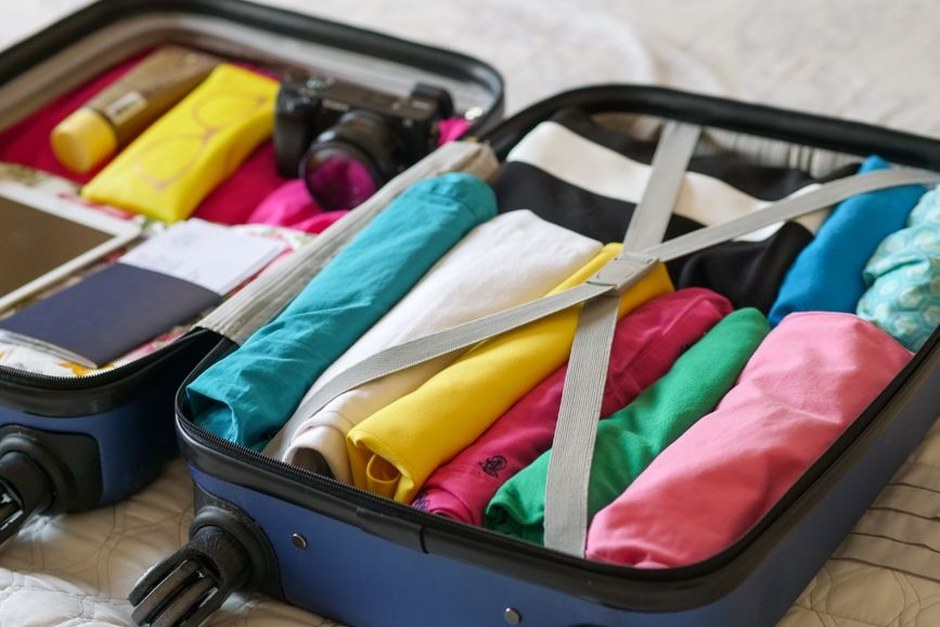
For a typical three-day trip, two bottoms, three tops, one mid-layer, one outer layer, and one pair of comfortable shoes can cover a surprising amount. Add a second pair of shoes only when the trip truly calls for it.
Pack for repetition, not novelty
Travelling is one of the easiest places to repeat clothes because the setting changes around you. A shirt worn under a jacket on the first evening can appear again with different trousers the next day. A knit layer can move from train seat to café terrace to early-morning walk.
Items that are awkward, delicate, or useful only with one other piece tend to become dead weight. If you hesitate over something, ask what specific moment it is for. If there is no answer, leave it behind.
Give small objects a home
Chargers, sunglasses, earphones, medication, keys, and travel documents create most of the last-minute searching. Keep them in two or three predictable places: one pouch for electronics, one small wash bag, and one pocket for documents. The organisation matters more than the containers themselves.
A reusable water bottle, compact tote, and a pen are among the least glamorous travel items, but they earn their space repeatedly. A thin scarf or light layer can also be useful on cold trains, windy streets, or shaded terraces.
Leave a little empty space
A tightly packed bag is harder to use than a slightly underfilled one. Leaving a small amount of room makes it easier to repack each morning and gives you somewhere to put a book, local food, or a damp layer without reorganising everything.
On the final day, the best sign that your packing worked is not that every item was worn exactly once. It is that you could move through the trip without thinking much about your bag at all.
Light packing becomes easier with practice because you learn what you actually reach for away from home. After each short trip, notice the untouched items and the things you used repeatedly. That small review is more useful than any universal packing list.