Small Composition Habits That Harm Your Landscape Photos (and How to Fix Them)
Problem
Many amateur photographers return from outings feeling like something is missing from their images. The scene was beautiful, their gear worked, but the photos look flat, crowded, or indifferent. Common small habits cause this: centering the subject by default, ignoring the foreground, poorly placed horizons, cluttered edges, weak sense of scale, and relying on heavy processing to “fix” composition issues. These habits are easy to repeat because they sometimes produce acceptable images, which reinforces them. Yet they limit the emotional clarity and visual rhythm of your photographs.
Principles
Rather than a long list of rules, try a handful of guiding principles that correct the habitual mistakes above. Apply them deliberately while composing and you’ll see steady improvement.
- Decide on a clear subject: Every strong photograph has something at its visual or conceptual center — a rock, tree, path, or light patch. If your image doesn’t guide the viewer’s eye, it can feel indecisive.
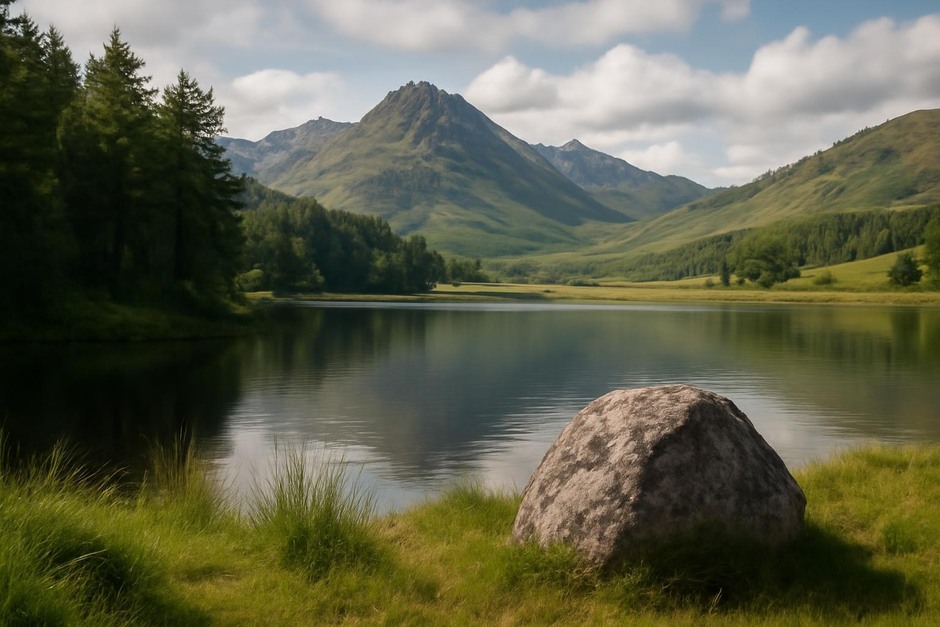
- Use foreground, middle, and background: Including distinct planes gives depth. A simple foreground anchor (stones, grass, a log) pulls the viewer into the scene.
- Mind the horizon: Place the horizon to emphasize either sky or land. Centering it usually weakens both elements.
- Simplify the edges: Before you press the shutter, scan the frame for distracting branches, poles, or bright spots at the edges and either move or reframe.
- Look for leading lines and shapes: Paths, shorelines, fences, and repetitive patterns guide the eye and create rhythm.
- Establish scale: Add a person, tree, or familiar object to show the size of a place when necessary.
- Resist overprocessing: Strong processing should complement composition, not compensate for it. First fix the frame, then make subtle adjustments.
Examples
These quick comparisons show the habit, why it weakens an image, and a simple correction you can try on your next walk.
- Habit: Centering everything. A lone tree placed squarely in the middle can look static or portrait-like. Correction: Shift the tree off-center onto an intersection of imaginary thirds, or use it to anchor a diagonal composition that leads across the frame.
- Habit: Ignoring the foreground. A wide scene with no foreground anchor reads as a flat postcard. Correction: Move a few steps and include rocks, wildflowers, or ripples in the lower third to create depth.
- Habit: Cutting off important elements. Truncating a mountain peak or tree branch at the edge gives a cramped feeling. Correction: Either include the whole element or crop deliberately so the partial cut feels intentional, often by reshaping the frame to include negative space.
- Habit: Busy edges and clutter. Random branches and trash distract the eye. Correction: Walk a few steps, change your angle, or use a slightly longer focal length to compress and remove distractions at the edges.
- Habit: No sense of scale in vast scenes. Sweeping dunes or fjords feel abstract when scale is missing. Correction: Introduce a person, a tent, or a recognizable object to give the viewer a measure of the scene’s size.
- Habit: Relying on heavy HDR or saturation. Overprocessing can create an unnatural mood when composition was the underlying issue. Correction: Start with a restrained edit and focus on contrast, tonal separation, and selective sharpening that supports the composition.
Practice Checklist
- Identify your subject first: name it aloud or in your head before composing.
- Add a foreground element when possible to create depth.
- Place the horizon on the top or bottom third, not the middle.
- Scan and remove distractions from the frame edges by moving or reframing.
- Use leading lines or repeated shapes to guide the eye.
- Introduce a scale element when the scene’s size is important.
- Make minimal edits first; avoid boosting saturation or clarity to “fix” composition.
- Take three frames with small variations (higher, lower, slightly left/right) and compare later to learn which change mattered most.
These are small habits you can practice on short outings. The goal is not to memorize rules but to cultivate a calm routine: notice the subject, shape the space, and choose what to include and what to leave out. Over time, composing with these principles will feel less like a checklist and more like a quiet, confident choice.